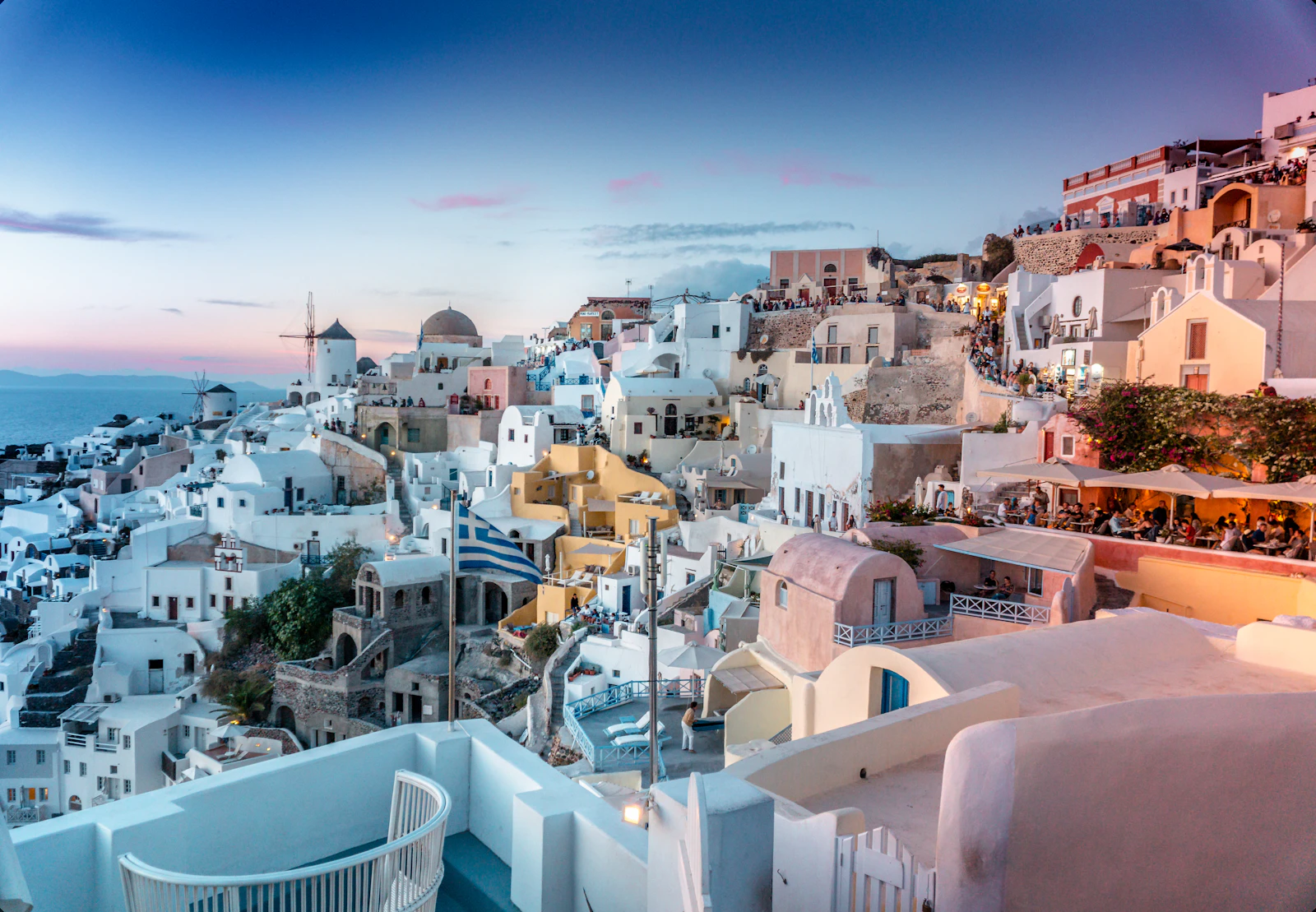
Everyone knows the photograph: white cubes, blue domes, a caldera blushing at sunset. What the photograph never shows is the hour after the last ferry leaves — when the islands exhale and finally become themselves.
We send very few travellers to Santorini in July, and never to where the cruise tenders land. The Greece worth crossing the world for is quieter, slower, and almost entirely a matter of timing. Arrive on an island in the late afternoon, once the day-trippers have been gathered back to their ships, and a different place reveals itself: shutters reopening, tavernas laying their tables, old men returning to the kafeneío as the heat lets go.
It is in those quiet hours that the Cyclades give up their real pleasures — a swim off a boat with no one else in the bay, a plate of tomatoes that taste of the sun that grew them, a walk through a village where the only sound is your own footsteps on warm stone.
Where we send people instead
Folegandros, for the Chora that clings to its cliff and a single perfect square. Sifnos, for the pottery and the best tables in the islands. Patmos, for a monastery and a stillness that feels close to holy. And when a traveller insists on Santorini, we put them on the far north of the island, in a house with a cook and a captain, and we plan the days around when everyone else has gone.
The luxury is not the view. The luxury is having the view to yourself.
None of this is difficult to arrange — it simply requires knowing the rhythm of each island and refusing to fight it. A private boat that leaves when the crowds arrive and returns when they leave. A villa held a season in advance. A table that is yours because the owner is a friend.
That is the whole of our craft, really: to give you the place at the hour it is most itself, and to make certain you are the only one there to see it.